
Frequently Ask Questions
Home / FAQ
Garage Door Troubleshooting FAQs
Find the most common garage door problems, what they mean, and the safest next step.
- My Garage Door is Crooked
- My Garage Door is Extremely Noisy
- My Garage Door Remote is Not Working / My Keyless Entry is Not Working
- My Garage Door Opener Makes Loud (Screeching) Metal Friction Noises
- My Garage Door Won’t Close
- My Garage Door Won’t Open Or Will Only Open Slightly
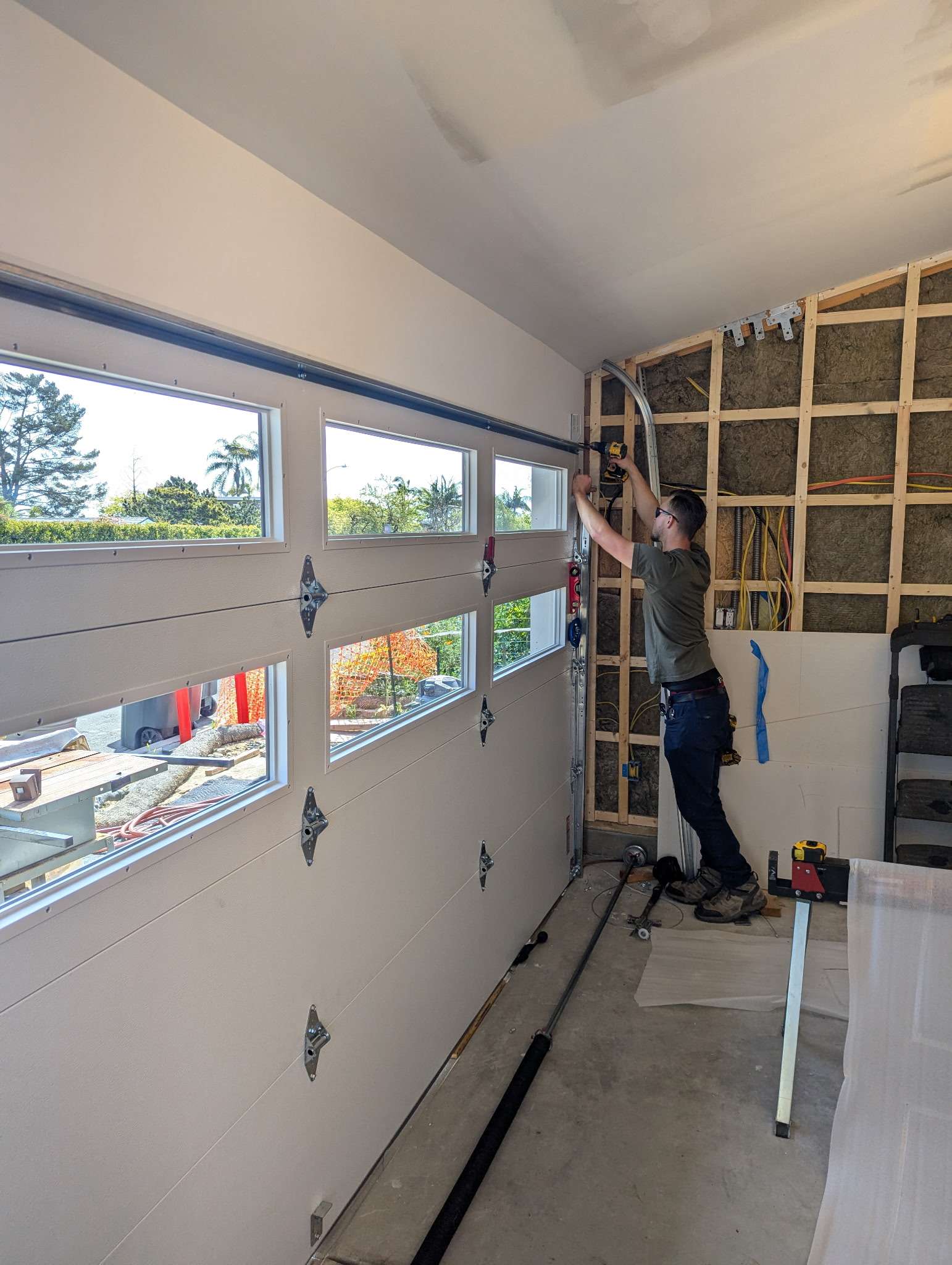
"My Garage Door Is Crooked"
If your garage door looks tilted, uneven, or “stuck” on one side, it usually means something is out of balance—often a spring, cable, or track issue. This can get worse fast and may damage the opener or door panels if forced.
Safety note: If the door is hanging, hard to lift, or looks off-track, stop using it and keep people clear of the area.
Below are the most common reasons for this to happen:
Broken Garage Door Spring
Residential garage doors can weigh anywhere from 100lbs to 1000lbs. It is not the motor, like some assume, that is lifting all this weight to open the garage door. The weight of the garage door is counterbalanced by the tension of the torsion springs (usually located above the door). If the spring is broken, or the incorrect size, the door will be difficult or impossible to open by hand or with the opener.
Binding Track or Hardware
There are many moving parts on the garage door (hinges, rollers, cables, drums, top and bottom brackets, drums, bearing plates). These components allow the door to open and close smoothly with the help of the springs. The track is fixed in place and act as a guide as the overhead garage door travels from the closed (vertical) position to the open (horizontal position). If one of these parts fatigue and break or become loose it can cause the door to bind. If one of these parts were installed incorrectly it can also lead to excessive friction. It is also important for the track to be properly secured and installed level and plumb. Loose track or uneven track can cause issues
Broken Garage Door Spring
Residential garage doors can weigh anywhere from 100lbs to 1000lbs. It is not the motor, like some assume, that is lifting all this weight to open the garage door. The weight of the garage door is counterbalanced by the tension of the torsion springs (usually located above the door). If the spring is broken, or the incorrect size, the door will be difficult or impossible to open by hand or with the opener.
“My Garage Door is Extremely Noisy”
If your garage door is suddenly grinding, squealing, or rattling, a part is likely worn, loose, or lacking lubrication. Don’t force it—continued use can damage the rollers, track, or opener.
Safety note: If you heard a loud bang and the door feels heavy, stop using it. This can indicate a broken spring.
Below are the most common reasons for this to happen:
Broken Garage Door Spring
Residential garage doors can weigh anywhere from 100lbs to 1000lbs. It is not the motor, like some assume, that is lifting all this weight to open the garage door. The weight of the garage door is counterbalanced by the tension of the torsion springs (usually located above the door). If the spring is broken, or the incorrect size, the door will be difficult or impossible to open by hand or with the opener.
Binding Track or Hardware
There are many moving parts on the garage door (hinges, rollers, cables, drums, top and bottom brackets, drums, bearing plates). These components allow the door to open and close smoothly with the help of the springs. The track is fixed in place and act as a guide as the overhead garage door travels from the closed (vertical) position to the open (horizontal position). If one of these parts fatigue and break or become loose it can cause the door to bind. If one of these parts were installed incorrectly it can also lead to excessive friction. It is also important for the track to be properly secured and installed level and plumb. Loose track or uneven track can cause issues
Broken Garage Door Spring
Residential garage doors can weigh anywhere from 100lbs to 1000lbs. It is not the motor, like some assume, that is lifting all this weight to open the garage door. The weight of the garage door is counterbalanced by the tension of the torsion springs (usually located above the door). If the spring is broken, or the incorrect size, the door will be difficult or impossible to open by hand or with the opener.
“My Garage Door Remote is Not Working” / “My Keyless Entry is Not Working.”
A loud screeching or metal-on-metal sound usually means a part is rubbing, worn, or out of alignment. Don’t keep running the opener—this can damage the motor, rail, or chain/belt.
Safety note: Stop using it if the door jerks, struggles, or the noise is getting worse.
Below are the most common reasons for this to happen:
Dead Batteries
Most often the issue is the most obvious. Garage door remotes and exterior keypads are all battery powered. After several years of use they will fail and need replacement just like any other household battery powered device. Most remotes require a 12v or 3v battery, while keypads most often require a 9v battery(Exception: New Genie Keypads require two AAA batteries).
Defective or Broken Garage Door Accessories
Garage door remotes and keypads are not designed to last forever. They are plastic cases with small interior electronics. They are subject to wear and tear (a few drops, impacts, exposure to water and they are done for). We stock garage door opener remotes for the following manufacturers.
- Liftmaster and Chamberlain Garage Door Remotes and Keypads
- Genie Garage Door Remotes and Keypads
- Marantec Garage Door Remotes and Keypads
Broken or Failing Logic Board/ Receiver
All garage door remotes and other accessories communicate with the garage door opener though the internal computer called a logic board. The logic board and its receiver can fail. If you look at your opener on all makes and models there is an antennae coming through the bottom. Sometimes the board is defective and needs replacement. Other times it is an interference issue. If you have other wireless technology in your garage that operates on the same frequency as the opener it can cause poor range. Some LED bulbs can also cause this problem.
“My Garage Door Opener Makes Loud (Screeching) Metal Friction Noises.”
A loud screeching or metal-on-metal sound usually means a part is rubbing, worn, or out of alignment. Don’t keep running the opener—this can damage the motor, rail, or chain/belt.
Safety note: Stop using it if the door jerks, struggles, or the noise is getting worse.
Below are the most common reasons for this to happen:
Broken Garage Door Spring
Residential garage doors can weigh anywhere from 100lbs to 1000lbs. It is not the motor, like some assume, that is lifting all this weight to open the garage door. The weight of the garage door is counterbalanced by the tension of the torsion springs (usually located above the door). If the spring is broken, or the incorrect size, the door will be difficult or impossible to open by hand or with the opener.
Binding Track or Hardware
There are many moving parts on the garage door (hinges, rollers, cables, drums, top and bottom brackets, drums, bearing plates). These components allow the door to open and close smoothly with the help of the springs. The track is fixed in place and act as a guide as the overhead garage door travels from the closed (vertical) position to the open (horizontal position). If one of these parts fatigue and break or become loose it can cause the door to bind. If one of these parts were installed incorrectly it can also lead to excessive friction. It is also important for the track to be properly secured and installed level and plumb. Loose track or uneven track can cause issues
Broken Garage Door Spring
Residential garage doors can weigh anywhere from 100lbs to 1000lbs. It is not the motor, like some assume, that is lifting all this weight to open the garage door. The weight of the garage door is counterbalanced by the tension of the torsion springs (usually located above the door). If the spring is broken, or the incorrect size, the door will be difficult or impossible to open by hand or with the opener.
“My Garage Door Won’t Close.”
If your garage door won’t close or keeps reversing, it’s usually being stopped by the safety sensors, a track obstruction, or an opener setting issue. Don’t force it shut—doing so can damage the opener or door hardware.
Safety note: If the door is stuck open, secure the opening and keep people clear until it’s inspected.
Below are the most common reasons for this to happen:
Broken Garage Door Spring
Residential garage doors can weigh anywhere from 100lbs to 1000lbs. It is not the motor, like some assume, that is lifting all this weight to open the garage door. The weight of the garage door is counterbalanced by the tension of the torsion springs (usually located above the door). If the spring is broken, or the incorrect size, the door will be difficult or impossible to open by hand or with the opener.
Binding Track or Hardware
There are many moving parts on the garage door (hinges, rollers, cables, drums, top and bottom brackets, drums, bearing plates). These components allow the door to open and close smoothly with the help of the springs. The track is fixed in place and act as a guide as the overhead garage door travels from the closed (vertical) position to the open (horizontal position). If one of these parts fatigue and break or become loose it can cause the door to bind. If one of these parts were installed incorrectly it can also lead to excessive friction. It is also important for the track to be properly secured and installed level and plumb. Loose track or uneven track can cause issues
Broken Garage Door Spring
Residential garage doors can weigh anywhere from 100lbs to 1000lbs. It is not the motor, like some assume, that is lifting all this weight to open the garage door. The weight of the garage door is counterbalanced by the tension of the torsion springs (usually located above the door). If the spring is broken, or the incorrect size, the door will be difficult or impossible to open by hand or with the opener.
“My Garage Door Won’t Open, or Only Opens Slightly.”
If your garage door won’t open or only lifts a few inches before stopping, it’s usually a balance or hardware issue—often a broken spring, cable problem, or something binding in the track. Don’t keep trying to run the opener, as it can strain the motor and worsen the damage.
Safety note: If the door feels unusually heavy or you heard a loud bang, stop using it—this may indicate a broken spring.
Below are the most common reasons for this to happen:
Broken Garage Door Spring
Residential garage doors can weigh anywhere from 100lbs to 1000lbs. It is not the motor, like some assume, that is lifting all this weight to open the garage door. The weight of the garage door is counterbalanced by the tension of the torsion springs (usually located above the door). If the spring is broken, or the incorrect size, the door will be difficult or impossible to open by hand or with the opener.
Binding Track or Hardware
There are many moving parts on the garage door (hinges, rollers, cables, drums, top and bottom brackets, drums, bearing plates). These components allow the door to open and close smoothly with the help of the springs. The track is fixed in place and act as a guide as the overhead garage door travels from the closed (vertical) position to the open (horizontal position). If one of these parts fatigue and break or become loose it can cause the door to bind. If one of these parts were installed incorrectly it can also lead to excessive friction. It is also important for the track to be properly secured and installed level and plumb. Loose track or uneven track can cause issues
Broken Garage Door Spring
Residential garage doors can weigh anywhere from 100lbs to 1000lbs. It is not the motor, like some assume, that is lifting all this weight to open the garage door. The weight of the garage door is counterbalanced by the tension of the torsion springs (usually located above the door). If the spring is broken, or the incorrect size, the door will be difficult or impossible to open by hand or with the opener.
Broken Garage Door Opener
There are 4 primary types of garage door openers. Each drive type has common replacement parts:
- Screw Drive Openers: There is a coupling and a trolley/rack that pushes and pulls the door as they travel. Often made of plastic or a soft metal and can wear out.
- Chain Drive Openers: Within the opener there is a vinyl gear that can fail. Usually takes at least 10 years. You will hear the opener run but there will be no movement.
- Belt Drive Openers: Has the same gear as the belt drive but can also have a damaged belt which can give the same symptom as the damaged gear
- Wall Mount Openers: The wall mount openers work by attaching the opener to the torsion system (tube) with a coupler. If coulping is loose opener will not open.